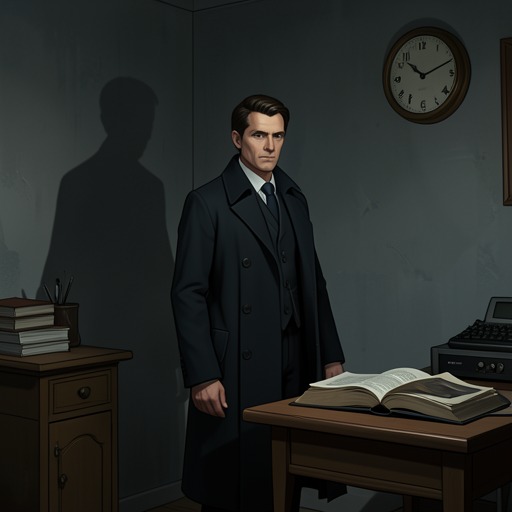
King Hamlet
The Interpretation of DreamsKing Hamlet, Hamlet’s murdered father, appears in Sigmund Freud’s account chiefly through the command his ghost lays upon his son: avenge his death. Freud treats that demand not as an ordinary obstacle to action but as the hinge of the tragedy’s psychological conflict. The man who killed King Hamlet and took his place beside Hamlet’s mother embodies the son’s repressed infant wishes, so the required revenge confronts Hamlet with desires he cannot consciously accept.
Identity and Dramatic Presence
The evidence identifies King Hamlet as the father whose death gives rise to Hamlet’s revenge task. His presence in Freud’s discussion is mediated by the ghost and by the effect of its command on the son; Freud offers no separate account of the king’s life, character, or actions before his death. The father’s dramatic force therefore rests on the obligation his death creates and on the psychic conflict that obligation exposes.
The Revenge Command and Hamlet’s Inhibition
Hamlet is not presented as wholly incapable of acting. Freud points to two occasions on which he acts decisively: in sudden passion, he kills the eavesdropper behind the arras; later, with calculation, he sends the two courtiers to the deaths intended for himself. The contrast makes his failure to carry out the ghost’s command more revealing: the inhibition attaches specifically to revenge against the man who removed his father and took his place beside Hamlet’s mother.
Freud interprets that inhibition through the relation between father, son, and mother. The new husband realizes Hamlet’s repressed infant wishes, making the proposed revenge psychologically entangled with the son’s own unconscious desires. Rather than allowing the revulsion that might urge him to punish the man, the conflict turns inward as self-recrimination and scruples of conscience. In this reading, the father’s ghost sets the task, while the family relation embodied in the task helps explain why Hamlet cannot perform it.
Interpretive Significance
King Hamlet’s importance in Freud’s account is thus structural as well as familial: his death produces the demand for revenge, and the identity of the person to be punished makes that demand a test of Hamlet’s repressed wishes. The ghost’s command brings into view a conflict the play does not state directly. Freud presents his account as an interpretation of the deepest layer of the poet’s psychological impulses, not as an exhaustive explanation of the tragedy or its multiple possible meanings.